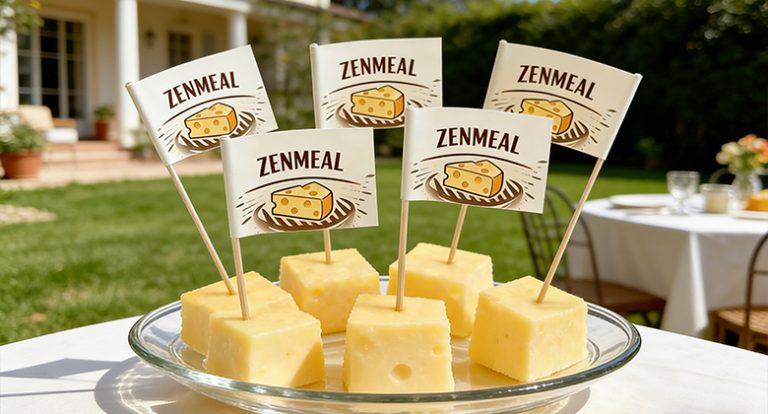
Why Custom Food Picks Bubble and Fall Off During High-Temperature Frying
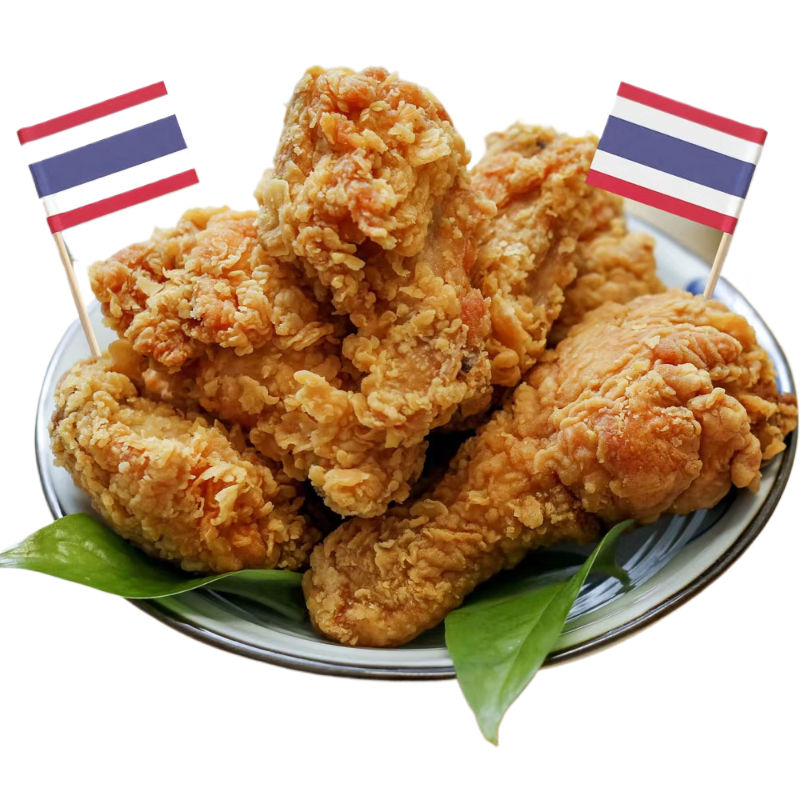
Food picks are essential accessory items for fried prefabricated foods and chain fried chicken stores, widely used for flavor marking, category classification and brand visual display. Most food processing factories and catering brand operators encounter a common but costly problem: customized high-temperature resistant frying food picks develop blisters on the flag surface and adhesive layer separation after soaking in 170-190℃ high-temperature hot oil, eventually causing the entire paper flag to fall off from bamboo skewers. This issue leads to ingredient contamination, full-batch product scrapping, and even food safety inspection risks that raise brand operation hazards. With more than 15 years of experience in customized disposable catering tableware production, Gorlando has summarized that blistering and falling-off failures of commercial bamboo skewer food picks stem from mismatched adhesive materials rather than defective paper quality.
Many procurement personnel hold a wrong view that thickened paper flags and stronger initial viscosity can solve high-temperature detachment problems. However, actual commercial working conditions are far stricter than conventional tests, including continuous high-temperature frying, repeated cold and heat alternation, persistent oil penetration, and long-term constant-temperature soaking. Ordinary civilian-grade bonding processes cannot adapt to such superimposed harsh environments. Eliminating fundamental failures requires analyzing the microscopic failure mechanism of adhesives and adopting exclusive commercial-grade solutions.
1. Microscopic Failure Mechanism of mainstream Commercial Food Pick Adhesives Under High Heat
Currently, commercial food-grade bamboo pick adhesives are mainly divided into two categories: EVA hot melt adhesive and water-based adhesive. Both perform well in normal-temperature dry packaging and low-temperature labeling scenarios but suffer irreversible structural failures under the high-temperature, high-pressure and oil-penetrating frying environment, with fixed microscopic variation rules.
1.1 EVA Hot Melt Adhesive: Liquefaction and Delamination Cause Overall Detachment
The critical softening temperature of conventional EVA hot melt adhesive is only 60-80℃, while the constant oil temperature for commercial frying processes remains 170-190℃. The over 100℃ temperature difference directly destroys the solid structure of the adhesive. When contacting high-temperature hot oil, the solid adhesive layer instantly turns into flowing liquid, creating tiny gaps on the bonded interface. High-temperature grease continuously penetrates and fills the gaps between paper flags and bamboo skewers, completely cutting off the bonding force between adhesive and base materials.
In continuous commercial frying production, the oil temperature remains stable without cooling down. The liquefied adhesive cannot re-solidify and only keeps diluting and peeling off, resulting in complete detachment of glue-bonded food picks. Paper and adhesive debris mixing with fried ingredients causes severe foreign matter hazards.
Water-based adhesives take water as the solvent. Even after drying and curing, tiny residual bound water and pore moisture remain inside the adhesive layer, which is an inherent structural defect. When soaked in high-temperature hot oil, the residual water vaporizes into high-pressure steam within 0.3 seconds.
Since paper flags fit tightly with bamboo skewers, the trapped steam cannot diffuse outward and squeezes the adhesive layer to bulge the paper surface. Dense micro bubbles form first and then merge and expand continuously, tearing the molecular structure of the cured adhesive layer. This perfectly explains why commercial food picks always blister, curl at the edges and finally fall off after frying.
2. 2026 Commercial-Grade High-Temperature Resistance Test Data Comparison
To accurately distinguish the high-temperature and oil resistance of different bonding processes and adhesive materials, Gorlando Laboratory fully replicates commercial frying production line conditions and conducts 5-cycle continuous frying tests on mainstream market food picks. The authoritative test data is shown below:
High-end fried prefabricated products, mass standardized production
The test strictly follows commercial production standards: adopting 180℃ edible palm oil, 8-minute single frying duration, one cooling cycle after each frying round, and 5 total cycles. Post-test inspection covers appearance, bonding strength and adhesive residue in oil, providing reliable data for commercial procurement and selection.
3. Fundamental Solutions for Commercial Food Pick Blistering & Detachment
Based on years of commercial customization experience and verified test data, Gorlando has developed two mature high-temperature resistant fried food pick solutions tailored to diverse brand customization needs and production conditions, completely eliminating high-temperature blistering and detachment risks for all fried food scenarios.
3.1 Glue-Free Self-Locking Food Picks: Zero Adhesive Hazards for All High-Heat Scenarios
As a self-developed patented structure, this process completely abandons traditional glue bonding to eliminate adhesive failure fundamentally. Precision die-cutting forms double reverse-tooth notches on the paper pick body. After the bamboo skewer penetrates the notch, the reverse teeth lock tightly relying on paper toughness to form high-strength physical occlusion.
This glue-free high-temperature resistant food pick is not affected by oil temperature, grease or temperature fluctuation. No blistering, delamination or detachment occurs even after long-term hot oil soaking and repeated freeze-thaw cycles. Zero adhesive precipitation and paper debris ensure full compliance with high-standard food safety requirements, making it the preferred choice for large-scale prefabricated food factories. It fully supports customized sizes, patterns and multi-color printing without compromising brand display effects.
3.2 Food-Grade Oil-Resistant Acrylic Adhesive Picks: For Refined Customization Needs
For customized picks requiring lamination, special process printing or irregular shapes that cannot adopt buckle structures, we exclusively apply FDA and EU 10/2011 certified high-temperature oil-resistant acrylic adhesive. Validated by thousands of commercial condition tests, the adhesive features stable molecular structure, excellent high-temperature resistance, oil penetration resistance and cold-heat shock resistance, maintaining stable bonding performance in long-term 190℃ hot oil environments.
4. On-Site Inspection Checklist for Commercial Procurement
Most procurement teams only conduct normal-temperature adhesion tests on samples, failing to verify actual high-temperature performance and causing mass quality problems after bulk delivery. Below is a simple, professional and equipment-free self-inspection process to identify inferior high-temperature resistant custom commercial food picks:
Step 1: Simulate commercial frying temperature: Heat edible oil or high-temperature silicone oil to a constant 180℃, consistent with standard production temperature;
Step 2: Conduct immersive high-heat test: Fix the test food pick on a bamboo skewer and fully immerse it in hot oil for 10 to 30 seconds;
Step 3: Observe key details: Check for surface blistering, edge curling, adhesive softening or paper debris falling off;
Step 4: Verify qualification certificates: Require suppliers to provide adhesive heat resistance test reports and food contact safety certifications, avoiding unqualified products with false high-temperature resistance claims.
5. FAQ
We have sorted out and answered the most frequently asked questions from commercial customization clients to help avoid selection and customization pitfalls:
Q1: Can self-locking food picks withstand high-speed assembly line production?
A1: Absolutely yes. Our patented self-locking structure has passed mechanical tension tests, resisting vibration from high-speed production lines, friction during transportation and multiple extreme working conditions. Its locking strength is far higher than glue-bonded picks, ensuring no loosening or displacement during mass standardized production.
Q2: Will oil-resistant glue picks blister or fall off after freezing storage and subsequent frying?
A2: No blistering or detachment occurs. We have completed specialized tests covering the full commercial process of freezing storage, thawing and high-temperature frying. The qualified acrylic adhesive resists shrinkage and stretching, maintaining stable bonding without cracking or delaminating under drastic temperature changes.
Q3: Is small-batch trial customization available for exclusive logos and flavor labels?
A3: Yes. Gorlando owns an in-house design team and flexible production lines, supporting size adjustment, pattern printing, text customization and color matching for both small-batch sampling and large-batch mass production with stable lead times.
Q4: Why do low-cost picks stick well at room temperature but blister easily during frying?
A4: Low-cost products only focus on normal-temperature initial viscosity and adopt general adhesives without high-temperature and oil-resistant modification. Such adhesives fail structurally under high-temperature hot oil conditions, which is an inherent material defect that cannot be fixed by production process optimization.
6. Optimize Processes to Avoid Commercial Food Safety Risks
Small as they are, fried food picks directly determine the qualification rate of finished products, brand reputation and food safety compliance. Commercial production prioritizes precise matching of materials and processes with actual working conditions, rather than simple surface adhesion performance.
Equipped with self-owned bamboo raw material bases, two standardized production workshops and a complete quality control system, Gorlando ensures all commercial frying food picks undergo multiple rounds of high-temperature, freeze-thaw and oil-resistance cycle tests with full-batch pre-delivery inspection. We provide tailored solutions and sampling services for both universal and exclusive customized products, helping catering and food enterprises reduce production losses and eliminate compliance risks. Feel free to contact the Gorlando team for professional customization and technical support.
In high-end bars, wedding banquets and themed events, party decorative picks are essential garnishes to elevate drink presentation and create a premium ambient atmosphere. However, many cateri...
Food Picks are more than just tools to hold burgers and sandwiches together—they are a core marketing vehicle for cost-effective breakthroughs in the catering industry. Most catering operators...
If you’ve ever hosted a wine and cheese night, you know the inevitable moment of hesitation. A guest stands over a beautifully arranged board, hovering their knife over a pale wedge, and asks the ...


 Español
 Français
 Deutsch
 Português
 Русский
 العربية
 简体中文
简体中文 Italiano
 日本語
日本語 한국어
한국어 Türkçe
 Tiếng Việt
 ไทย
ไทย Indonesia
 Melayu