Custom Heat Resistant Food Pick Flag: Break Down Paper & Ink Craft for Fade-Proof Deep-Frying Use
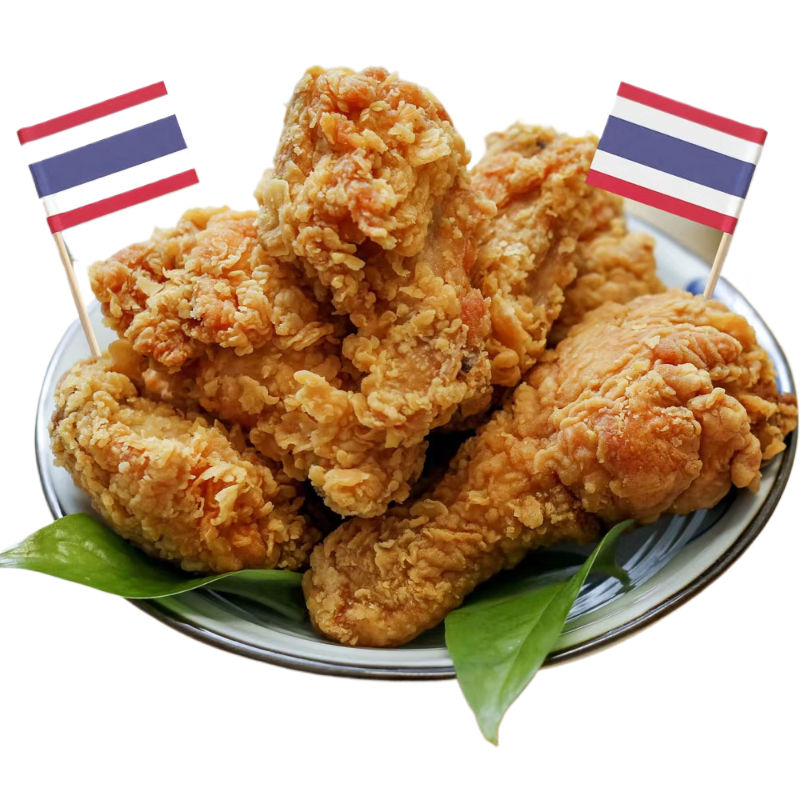
Numerous catering operators across the food service industry have voiced frustrations over flawed customized orders recently. After receiving newly made heat resistant food pick flag, store owners found branded imprints blister and peel off rapidly once stuck onto freshly deep-fried dishes soaked in high-temperature grease, with flaked ink sticking to fried crusts and triggering formal customer complaints. Most buyers prioritize unit pricing while sourcing goods yet overlook critical high-temperature resistance tests for printing ink, the leading contributor to widespread fading failures. A behind-the-counter clip captured by a restaurant worker went viral among local catering communities not long ago: crispy fried chicken lifted out from 180℃ hot oil was topped with custom branded pick flags, and in less than 20 seconds, black ink peeled off entirely and clung to chicken skin. Dissatisfied diners filed official complaints, prompting on-site food safety spot-checks from market supervision inspectors.
The core cause for failing inspections lies in missing heat resistance and substance migration tests on food-contact printing ink. Fresh fried food usually hits 160℃ to 180℃ right after cooking, a temperature range that dissolves resin inside conventional quick-dry ink instantly. Any pick flag intended for deep-fried food must adopt low migration LED-UV food-grade ink and pass hot oil simulation testing aligned with GB 4806.14-2023 or LFGB specifications.
Cost Beyond Simple Product Returns: Full Loss Analysis from a 70,000-piece Defective Pick Flag Shipment
A well-established regional fried snack chain ordered nearly 70,000 units of deep fry dedicated custom pick flag last month and rolled out the items across over 20 franchise outlets nationwide immediately after stock arrival. Complaints poured in just three days after launch, as loose ink fragments mixed with fried chicken and skewered bites. The brand had to pull the entire batch out of service and seal all defective inventory for scrapping. Every outlet scrambled for urgent small-batch restocks from scattered local suppliers, inflating incidental procurement costs and delaying the launch of their seasonal new menu by two weeks, alongside mounting poor ratings on mainstream food review platforms. It may surprise many business owners how such tiny decorative picks lead to substantial financial losses; cheap cut-rate manufacturing skips essential ink qualification testing to save upfront costs but results in inflated aftersales expenses and irreversible brand damage later on.
Why Does Hot Cooking Oil Strip Ink Off Pick Flags? Dual Impacts from Paper Thermal Expansion & Chemical Dissolution
11%-14% Paper Expansion Rate: How Regular Coated Paper Tears Printed Ink Under High Heat
When ordinary coated art paper soaks in frying oil above 160℃, fiber expansion can climb as high as 12%, stretching fixed ink coatings unevenly and triggering bubbling and pigment peeling. Switching to thicker cardstock cannot fully resolve the issue, as repeated lab trials confirm thicker paper only slows ink detachment by 8 to 15 seconds without fixing inherent thermal expansion flaws.
Cooking Oil as Powerful Organic Solvent: Chemical Breakdown of Generic Printing Ink Resin
Edible vegetable oil loaded with unsaturated fatty acids works as a potent natural organic solvent. Per GB 4806.14-2023 standards governing food-safe printing ink, unmodified mineral or plant-based ink breaks down quickly once exposed to heated grease, the core chemical reason behind widespread color bleeding and peeling.
The comparison chart below lays out obvious gaps: generic coated paper swells 11% to14% at 180℃ and blisters rapidly in hot oil, while Gorlando’s polyester-coated base paper caps expansion below 3.2% and endures 220℃ short-term deep frying with zero pigment bleeding. The divide originates from four core production links: raw paper selection, food certification for ink, curing techniques and surface protective coating.
Specification Item
Generic Custom Pick Flag
Gorlando Custom deep fry dedicated custom pick flag
Base Paper
Economical regular coated art paper
220℃ heat-resistant food-grade polyester coated specialty paper
Thermal Expansion Rate
11%~14% under 180℃ hot oil test
≤3.2% under identical temperature condition
Printing Ink
Generic commercial quick-dry ink without high-temp food migration certification
Fogra & national standard dual-certified low-migration LED-UV food-safe ink
Ink Curing Process
Open-air natural air-dry with high risk of incomplete inner curing
Sealed nitrogen inert UV curing to eliminate pseudo-dry thoroughly
Triple certification test covering LFGB, FDA and domestic standard for high heat & grease migration
Final takeaway for fade-free fried-food pick flags: paper thickness never matters as much as three key factors: maximum heat tolerance of polyester coating, official food-contact certification of printing ink, and full nitrogen-sealed UV curing execution.
Production Specifications for Deep-Fry Proof Pick Flags: Three Non-Negotiable Process Controls
Raw Material Check: Every Paper Batch Undergoes 30-second 185℃ Hot Oil Dip Test
Gorlando runs random pre-production sampling for all incoming polyester-coated paper rolls. Sample pieces get submerged in constant-temperature cooking oil at 185℃ for 30 seconds; only sheets free of bubbling and pigment bleed get approved for warehousing, eliminating common high-temperature deformation issues of cheap coated paper from the source. This testing temperature matches typical commercial fryer operating heat, and the 30-second soak far exceeds the usual 5–15 seconds a pick flag touches fried food, adding double-layer quality assurance.
Ink & Curing Rule: Low-migration LED-UV Ink plus Nitrogen Sealed Curing Against Partial Dry
Ink complying with GB 4806.14-2023 forms the core of reliable production. Many small-scale manufacturers skip nitrogen-filled enclosed curing cycles to shorten lead times, leaving ink seemingly dry on surface yet uncured internally, known in the trade as pseudo-dry ink which dissolves on contact with hot grease. All Gorlando printing equipment fits fully sealed nitrogen curing chambers, maintaining oxygen levels below 50ppm to push UV ink deep curing rate over 99% and permanently avoid incomplete curing defects.
A thin layer of micron-sized food-safe water-soluble varnish gets evenly coated post-printing, forming a solid physical barrier between printed patterns and frying grease. Even if hot oil seeps through paper fibers, direct corrosion on ink layers gets effectively blocked.
Four No-Lab Receiving Inspection Methods to Verify Pick Flag Heat Resistance
Step 1: Open-flame border test. Run lighter outer flame across pick flag edges for 2 seconds. Qualified samples only develop minor carbonization without loose colored pigment shedding.
Step 2: 180℃ hot oil immersion. Submerge entire pick flag in 180℃ edible cooking oil for 30 seconds; no floating pigment on oil surface marks a pass, complying with GB 4806.14-2023 hot oil simulation criteria.
Step3: 3% acetic acid soak test. Prepare 3% acetic acid solution replicating acidic pickling sauces, submerge picks at ambient temperature for two full hours; zero pigment precipitation meets national standard food simulant Type C rules.
Step4: Odor identification. Remove soaked picks and smell leftover cooking oil; sharp artificial chemical odors confirm substandard ink and warrant full order rejection.
FAQ on Custom Heat Resistant Pick Flags: Ink Selection for Deep Fry, Cold Dish & Microwave Applications
A: Heat resistance testing stays mandatory if products face temporary hot storage or microwave warming; full grease migration checks can be simplified for exclusively cold-served desserts, and Gorlando tweaks ink formulations based on actual usage scenarios. If intermittent microwave heating is possible, all picks need validation against microwave-safe food pick industrial benchmarks.
Q2: Can post-production film lamination fix fading problems for already delivered defective pick flags?
A: Pigment has penetrated deep inside paper fiber structures, and later surface lamination cannot stop grease infiltration. Refabrication costs always outpace rework expenses, so restarting production with certified raw materials remains the most practical fix.
Q3: Does Gorlando provide test ink samples alongside small trial runs for barbecue dedicated custom pick flag?
A: Free sample service is available, paired with third-party high-temperature lab certification for corresponding ink, enabling buyers to arrange independent third-party inspections as needed.
Q4: Can generic commercial ink work for pick flags designed exclusively for cold appetizer platters?
A: Vinegar and citrus juice in cold meals register pH as low as 3.0, and such acidic surroundings gradually leach harmful photoinitiator residues from uncertified cheap ink. Low-migration food-grade ink remains the safer pick to prevent hidden food safety hazards.
With more than fifteen years specializing in eco-friendly disposable tableware production, Gorlando owns fifteen self-managed raw material bases plus two standardized production workshops. The brand customizes production workflows tailored to clients’ unique food serving habits, implementing full-chain food safety control spanning artwork confirmation, raw material procurement and finished product delivery, helping food brands steer clear of costly pick flag printing discoloration pitfalls.
Common overlooked application risks also exist: pick flags inserted into curry or tomato sauce suffer reverse pigment bleeding as condiment dyes seep into unprotected generic ink; flags stored at -18℃ frozen then reused for refrying develop micro-cracks on polyester coating from mismatched thermal expansion and contraction rates. Gorlando simulates all these niche service conditions during pre-production sampling. Clients needing technical support on heatproof pick flag printing can request filed triple-certification reports under LFGB, FDA and GB standards for reference anytime.
In low-temperature and high-humidity scenes such as convenience store refrigerators and bakery cold display cabinets, pick flags serve as small carriers for labeling flavors and showcasing bra...
In the commercial plating of fancy cocktails and specialty drinks, cocktail flag picks serve as vital accessories to create atmosphere and brand visual identification. When soaked in mixed liq...
Food picks are essential accessory items for fried prefabricated foods and chain fried chicken stores, widely used for flavor marking, category classification and brand visual display. Most fo...


 Español
 Français
 Deutsch
 Português
 Русский
 العربية
 简体中文
简体中文 Italiano
 日本語
日本語 한국어
한국어 Türkçe
 Tiếng Việt
 ไทย
ไทย Indonesia
 Melayu